Know & Share the Gospel

We’ve been focusing a whole lot on sharing our faith lately. We can talk strategies and provide tools for sharing the Gospel all day long, but if we do not know the Gospel deep inside our hearts, then we will not be able to share the Gospel in a natural and contextually appropriate way.

So, this week’s resource is Tell the Truth by Will Metzger.

This is a heftier resource than normal, but it’s worth every moment of investment. Metzger not only provides a thorough explanation of the Gospel and common misconceptions, but he also provides great insights on how to share the Gospel as well. It’s a holistic resource for evangelism, and I can’t recommend it highly enough.

Check it out here.

The Power of Stories

Hulu, Netflix, and Amazon Prime have all fed the binge-watching tv trend. Certainly, ease of access through online streaming has made binge-watching habits drastically higher, but this isn’t the only reason that so many of us devour show after show.

**I’m as guilty of this habit as anybody. My wife and I are about to finish the final season of 24 after having just started earlier this year.**

Another major reason is our culture’s obsession with stories. Postmodernity has led to a breakdown in the expectation for one overarching narrative that explains everything. In light of that, we emphasize and look for the truth we find in smaller, individualized stories. We wrestle with ideas of beauty, evil, truth, and the deepest questions of life through hearing stories from various mediums (TV, theater, music, etc.).

Stories are incredibly powerful, and our society is constantly searching for new stories to either give voice to their thoughts or bring understanding to the complexities of this world.

As Christians, we each have our own powerful story that communicates the greatest truth of all time: the Gospel—a story in itself.

Our personal story of our life before we met Jesus, our encounter with Jesus, and our transformed life after meeting him is one of the most potent tools for sharing the grace, mercy, love, and forgiveness of our God and Savior.

This week’s text—Acts 26—is just one of several examples throughout the book of Acts of Paul sharing the Gospel through his personal experience.

Like any good story, there are several clear plot points: 
     1. His life before Jesus
     2. His encounter with Jesus
     3. His life with Jesus
     4. His call to respond to the story

People are more often than not willing to hear out your personal story rather than a four point Gospel sermon. So take advantage of the power of your own personal story. Think through these points in your own life and shape how you share your story. Then share it with the same boldness and passion that Paul shared his in Acts 26.

Let the truth of the Gospel shine forth through your life to an unbelieving world.

The Story of the Gospel

Tracts often get a bad rap, and often, rightly so! But if you are looking for an easy to use tool that is also readily accessible to people in our digital age, then The Story is a great resource.

This short digital booklet summarizes the Gospel message well, and it looks good!

If you are in need of something to point people to who you may not get the opportunity to continue a conversation with or someone that may simply want something to mull over between conversations, then this resource is for you. Check it out by clicking the image below:

booklet

Scripture-Focused Discipleship

On Monday, I talked about the importance of studying Scripture as part of discipleship relationships. If you’ve ever led a Bible study, you may think that the thought of leading a study of a chapter of Scripture every week or two is a very daunting task. And if you’ve never led a Bible study, you may feel like you don’t even know where to begin.

Don’t worry. It’s not as intimidating as it may sound. Simply reading the Scripture and then asking specific questions is all you need. But what questions do you ask?
Discovery Bible Study is a simple method for leading a study of Scripture in discipleship groups by simply asking questions of the text and one another.

To get started leading a discipleship group, you can simply work through the DBS method. As you get more familiar with the gist of it, you will be more comfortable and able to lead without the guide in hand.

For now, check out these great Discovery Bible Study materials.

This is a great guide for leading a discipleship group that fits great into the model we’ve adopted at Gallery Church.

Implementing Intentional Discipleship

Gospel-centered discipleship has been the theme for the past several weeks. We’ve seen how much of our discipleship is off balanced.

But now, we’ve got to ask, “How do we actually do this discipleship thing?”

Intentionality is key in consistent growth as disciples, and without some tangible, practical handles for implementing discipleship, we will never get around to consistent growth and maturity in our faith. And we as a church have committed to sacrificially invest through intentional discipleship for the fame of Jesus.

In the final chapter of Jonathan Dodson’s Fight Clubs, he provides a few simple, practical tools for intentional discipleship. His model is Biblical, effective, and easily reproducible, which is why we have adopted this as the basic structure of how we are going to pursue intentional discipleship.

So what are these basics?

1. Three Objectives: “Know Your Sin, Fight Your Sin, and Trust Your Savior.”

First, we must work to know our sin, our struggles. We’ve got to examine our hearts and allow others to examine our hearts. What are our sins? What are the circumstances and triggers for our sin? What lies are we believing?

Second, we must be committed to fighting our sin. We do this in the power of the Spirit and by the grace of God, but we must fight.

Third, we must turn from the lies we’ve identified and the sins we are committing as a result, and we must trust our Savior. Identify the promises that Jesus gives us in the Scriptures to counter the lies we are believing. An example of this from Fight Clubs:

“Instead of sexual lust, choose purity of heart: ‘Blessed are the pure in heart for they shall see God.’ God is eternally satisfying; lust is fleeting.”

Fighting sinful lies with the promises of God is the kind of fight we are called to in discipleship.

2. Two People: A discipleship group consists of at least two people, but no more than three, who meet together regularly for the sake of intentional times of discipleship.

*Discipleship is not limited to the meeting times and is, in fact, enhanced by living life together in general. But without these regular meetings, intentionality will be lost.

3. One Process: “Text-Theology-Life”

Let Scripture guide your time together, for it’s the one source of truth and life that we can count on. Begin with the text. Study the same Scripture passage and discuss it when you get together. Begin with this to avoid spending all your time catching up. Share how God has been teaching you through this passage.

Next, discuss theology. All this means is talk about what this passage teaches about God and his promises. Dodson suggests asking this question: “How does the person and work of Jesus inform this text?”

Finally, connect this to Life: How do these truths help you to “know your sin, fight your sin, and trust your savior.” Dig into each other’s lives, struggles, and victories. Apply the truths of Scripture to your lives.

**These basics are a summary of chapter five of Jonathan Dodson’s Fight Clubs**

Imagine what God would do through us if we pursue sacrificial investment through intentional discipleship like this. Imagine the fruit he would produce within us as we grow in the grace of the gospel. 

Imagine how God could then multiply these groups if we pour into a couple of men or women for a season and then call them to go and do the same.

If just five of us commit to do that, then ten others would be intentionally discipled. Then, after a semester or year, they begin to pour into others intentionally in the same way. Suddenly there are 45 people in intentional discipleship relationships. Do that one more time, and you have 135 people pointing each other to the gospel on a regular basis. Imagine what God could do with an entire church committed to this!

Let us be a people that sacrificially invest through intentional discipleship so that God would multiply it for His fame and our good.

Beware of Community

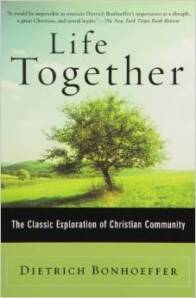
“Whoever cannot be alone should beware of community…. Whoever cannot stand being in community should beware of being alone…. Each taken by itself has profound pitfalls and perils. Those who want community without solitude plunge into the void of words and feelings, and those who seek solitude without community perish in the bottomless pit of vanity, self-infatuation and despair.”

-Dietrich Bonhoeffer in Life Together (Fortress Press), 82-83.

This profound truth—the necessity of both solitude and community—infuses our discipleship with a healthy balance of both an individual and community pursuit. In a culture that loves the idea of community, we must avoid idolizing it. As we pursue intentional discipleship, we must recognize that Jesus uses both solitude and community to draw us closer to and increase our faith in Him.

For further reflection on Biblical community, check out all of Bonhoeffer’s Life Together.

download (1)

The Missing Connection: Discipleship & Church Membership

Most people see little, if any, connection between discipleship and church membership. Yet as we are reading through Fight Clubs, Jonathan Dodson brings the essential nature of the church to bear upon discipleship. Unfortunately, as Dodson points out, “The gospel has been reduced to a personal ticket to glory. But the biblical gospel is much more than personal conversion or a heavenly reservation. The Gospel has two more ‘thirds.’ The Gospel calls us into community and onto mission in Jesus” (39). Thus growing in the gospel, i.e. discipleship, must be connected to growing in one’s relationship to the church. Dodson declares, “As the church, we are called to live, grow, and fight together for belief in the gospel and obedience to Christ” (41). Connecting and living life with a specific local church is essential to experience the totality of this reality. Thus church membership is vital for discipleship.

But maybe that is too quick of a jump for some. Maybe you object that church membership isn’t necessary as long as you’re connected to a community of believers. However, I would seriously disagree. Church membership isn’t simply getting your name on a role, and certainly, one’s salvation isn’t contingent upon it. Additionally, when Christ saves a person, he or she is already made part of the universal church, the people of God, throughout history. But church membership is about a commitment with a specific group of Christians. This commitment is a covenant modeled off God’s gracious, unending covenant with us. It’s a covenant to “live, grow, and fight together for belief in the gospel and obedience to Christ,” and to not give up on one another when the going gets tough. Church membership is a commitment to live out the “one another’s” of the New Testament toward specific people—even when that may not be returned.

The One Another’s

These “one another’s” refer to 50+ passages that define how the church is to “live, grow, and fight” with one another. Here’s a compiled list:

“Love one another: John 13:34-35; 15:12, 17; Romans 12:10; 13:8; 14:13; 1 Thessalonians 3:12; 4:9; 2 Thessalonians 1:3; 1 Peter 1:22; 1 John 3:11, 3:22; 4:8; 23; 4:7, 11-12; 2 John 1: 5
Serve one another: Galatians 5:13; 21; Philippians 2:3; 1 Peter 4:9; 5:5
Accept one another: Romans 15:7, 14
Strengthen one another: Romans 14:19
Help one another: Hebrews 3:13; 10:24
Encourage one another: Romans 14:19; 15:14; Colossians 3:16; 1 Thessalonians 5:11; Hebrews 3:13; 10:24-25
Care for one another: Galatians 6:2
Forgive one another: Ephesians 4:32; Colossians 3:13
Submit to one another: Ephesians 5:21; 1 Peter 5:5
Commit to one another: 1 John 3:16
Build trust with one another: 1 John 1:7
Be devoted to one another: Romans 12:10
Be patient with one another: Ephesians 4:2; Colossians 3:13
Be interested in one another: Philippians 2:4
Be accountable to one another: Ephesians 5:21
Confess to one another: James 5:16
Live in harmony with one another: Romans 12:16
Do not be conceited to one another: Romans 13:8
Do not pass judgment to one another: Romans 14:13; 15:7
Do not slander one another: James 4:11
Instruct one another: Romans 16:16
Greet one another: Romans 16:16; 1 Corinthians 1:10; 2 Corinthians 13:12
Admonish one another: Romans 5:14; Colossians 3:16
Spur one another on toward love and good deeds:  Hebrews 10:24
Meet with one another: Hebrews 10:25
Agree with one another: 1 Corinthians 16:20
Be concerned for one another: Hebrews 10:24
Be humble to one another in love: Ephesians 4:2
Be compassionate to one another: Ephesians 4:32
Do not be consumed by one another Galatians 5:14-15
Do not anger one another: Galatians 5:26
Do not lie to one another: Colossians 3:9
Do not grumble to one another: James 5:9
Give preference to one another: Romans 12:10
Be at peace with one another: Romans 12:18
Sing to one another: Ephesians 5:19
Be of the same mind to one another: Romans 12:16; 15:5
Comfort one another: 1 Thessalonians 4:18; 5:11
Be kind to one another: Ephesians 4:32
Live in peace with one another: 1 Thessalonians 5:13
Carry one another’s burdens: Galatians 6:2”
– Into Thy Word Ministries, http://www.intothyword.org

Many of these are impossible to live out in loose, general connection with other Christians but must be lived out through the covenant of church membership.

The covenant of church membership is a grace of God for reminding us of how essential and serious our commitment to one another in a local church is. When times are good, it’s easy to love others and live these out, but our covenant spurs us to do so even when it’s not reciprocated (modeling God’s one-way love for us).

Discipleship—growing in the gospel—is tightly connected with the covenant of church membership, for we will only grow in the fullness of the gospel has we experience the totality of Gospel-centered community life in a local church.

Look at the Book

Do you want to learn to study Scripture, learn to mine the depths of the riches of God’s Word, and learn to do this without reading a massive book with a long process? You’re in luck!

John Piper has recently began a new initiative called Look at the Book. It’s a fantastic resource. Essentially, Piper films short videos of the process he works through as he studies Scripture. He talks through how he meditates upon the text. The examples of such a great pastor and scholar studying through passages of Scripture right before your eyes provides a resource that anyone desiring to know God’s Word more would be foolish to miss out on.

Watching these videos is like apprenticing under a great Bible teacher.

Watch Piper break down Matthew 28:18-20: http://www.desiringgod.org/labs/i-am-with-you-always .

You can access other videos here.

Don’t wait to check out these phenomenal resources.

Avoiding License in Discipleship

Many of us have come for moralistic/legalistic backgrounds. Sunday school lessons were often focused upon the rules we’re meant to obey rather than the grace we’re meant to rely upon. As a result, many of us have swung toward the other end of the spectrum in order to avoid the strict self-righteousness that characterizes the legalism we grew up around. The problem is the other end of the spectrum is license, another deadly peril.

The glorious news of the Gospel is that Jesus has made us righteous and holy based upon grace rather than upon anything we can do. Yet, just because we’ve been saved by grace and we cannot earn God’s favor on our own, we aren’t to continue in sin. But the temptation toward license is the idea that we are free to live as we please since grace will always cover us.

The attitude of license completely undermines discipleship.

Paul directly battled this attitude in Romans 6:1-4.

What shall we say then? Are we to continue in sin that grace may abound? By no means! How can we who died to sin still live in it? Do you not know that all of us who have been baptized into Christ Jesus were baptized into his death? We were buried therefore with him by baptism into death, in order that, just as Christ was raised from the dead by the glory of the Father, we too might walk in newness of life.

We are to embrace grace and allow that to joyfully lead us to the pursuit of holiness both toward God and man. We’ve been freed not to lazily pursue whatever desires our flesh produces because grace covers those sins, but we’ve been freed from sin and the flesh to pursue holiness for the glory of God (Romans 6:19).

Avoid both legalism and license. And pursue holiness for the glory of God and the good of man by trusting in grace and not yourself.

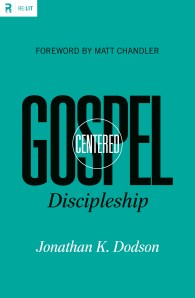
Gospel Centered Discipleship by Jonathan Dodson

As we turn our focus to sacrificially investing through intentional discipleship, there is one resource that I highly recommend. This past summer, we did a book study on Gospel Centered Discipleship by Jonathan Dodson. (We are currently working through the booklet version—Fight Clubs—in our small groups.) This resource provides a biblical understanding of discipleship, correctives for typical misconceptions, and great practical tools for making and maturing disciples. Check it out, and start making disciples!

Gospel-Centered-Discipleship