Avoiding License in Discipleship

Many of us have come for moralistic/legalistic backgrounds. Sunday school lessons were often focused upon the rules we’re meant to obey rather than the grace we’re meant to rely upon. As a result, many of us have swung toward the other end of the spectrum in order to avoid the strict self-righteousness that characterizes the legalism we grew up around. The problem is the other end of the spectrum is license, another deadly peril.

The glorious news of the Gospel is that Jesus has made us righteous and holy based upon grace rather than upon anything we can do. Yet, just because we’ve been saved by grace and we cannot earn God’s favor on our own, we aren’t to continue in sin. But the temptation toward license is the idea that we are free to live as we please since grace will always cover us.

The attitude of license completely undermines discipleship.

Paul directly battled this attitude in Romans 6:1-4.

What shall we say then? Are we to continue in sin that grace may abound? By no means! How can we who died to sin still live in it? Do you not know that all of us who have been baptized into Christ Jesus were baptized into his death? We were buried therefore with him by baptism into death, in order that, just as Christ was raised from the dead by the glory of the Father, we too might walk in newness of life.

We are to embrace grace and allow that to joyfully lead us to the pursuit of holiness both toward God and man. We’ve been freed not to lazily pursue whatever desires our flesh produces because grace covers those sins, but we’ve been freed from sin and the flesh to pursue holiness for the glory of God (Romans 6:19).

Avoid both legalism and license. And pursue holiness for the glory of God and the good of man by trusting in grace and not yourself.

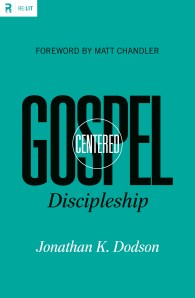
Gospel Centered Discipleship by Jonathan Dodson

As we turn our focus to sacrificially investing through intentional discipleship, there is one resource that I highly recommend. This past summer, we did a book study on Gospel Centered Discipleship by Jonathan Dodson. (We are currently working through the booklet version—Fight Clubs—in our small groups.) This resource provides a biblical understanding of discipleship, correctives for typical misconceptions, and great practical tools for making and maturing disciples. Check it out, and start making disciples!

Gospel-Centered-Discipleship

False Dichotomies of Discipleship

For the next four weeks, we are shifting our attention toward intentional discipleship. Rather than reflecting upon Scripture as I normally do, I will be considering some of the insights I’ve gleaned from Jonathan Dodson’s Fight Clubs as well as his more extended version Gospel-Centered Discipleship.

Through the first couple of chapters, Dodson considers the misconceptions that are often present concerning discipleship. If we don’t avoid two false dichotomies, we will end up with a terribly misshapen view of discipleship and incredibly distorted disciples.

False Dichotomy #1: Evangelism vs. Discipleship

For some reason, the American church has tended to view the Gospel as relevant to unbelievers only. The Gospel is viewed as simply the first class among many in the Christian life. In this paradigm, discipleship becomes programs and rituals that are add ons to enhance the Christian life.

However, as Dodson rightfully points out, this kind of attitude is incredibly unhelpful and starkly unbiblical. All of life is to revolve around the Gospel. We never move on from the good news that Jesus has saved us by grace through faith. So making disciples includes sharing the Gospel with unbelievers (evangelism) and maturing disciples (discipleship) through the Gospel as well. In this sense, evangelism and discipleship aren’t totally separate ideas, but instead, they are both centered upon and proclaiming the Gospel.

False Dichotomy #2: Vertical vs. Horizontal

Although we may not consciously adhere to this false dichotomy, we practically live it out. Some of us focus on discipleship that is oriented solely toward growing in our personal relationship with God. Others seek to grow in their missional reach and effectiveness.

Doing one of these without the other will create either monks or pragmatists. We must grow in both piety and mission.

May we throw off these false dichotomies and embrace a holistic discipleship centered upon the Gospel.

Revelation & Revitalization Part 1

The abundance of perspectives concerning the book of Revelation can be overwhelming. Much concerning the genre and imagery of Revelation is largely unfamiliar to most of the contemporary Christian world. Nevertheless, many people hold deep convictions concerning the interpretation of its contents. From dispensationalists to covenantalists and premillenialists to postmillenialists, scholars and lay people alike have passionate opinions concerning this unique book. Yet others avoid Revelation for its difficulty and apparent lack of clarity. Many Christians passively resign themselves to never understanding this apocalyptic book.

While the difficulties and longstanding debates concerning this book cannot be solved in a few short posts, a clear theme in Revelation can be seen and addressed: spiritual warfare in dying churches.

The dire need for revitalization is a direct result of spiritual warfare. Considering Scripture’s emphasis on spiritual warfare, Jerry Rankin asserts, “It is obvious that Satan is diametrically opposed to Christ, to the church, to the extension of God’s kingdom, and to individual Christians….”8 An enemy of God and His Church rules over this world and seeks to “devour” God’s people as the apostle points out in 1 Peter 5:8-9. Churches are constantly under attack from the evil one, and in the present age, some will falter because of these attacks. Thus, the reality of spiritual warfare establishes an expectation that churches will need to be revitalized, and this reality is never clearer than in Revelation.

In the coming weeks, I will elaborate upon various lessons concerning church revitalization that we can glean from Revelation. Continue to check back for posts on the reality of warfare, Christ’s path to victory, and the key concepts for revitalization.

Stoking the Flames of Persistent Prayer

George Müller was an incredible pastor in Great Britain during the 19th century. Not only did he passionately preach the gospel, but he also lived out a phenomenal example of sacrificial investment in caring for the needs of the poor and the powerless. He led countless souls to the one who can provide rest and healing both spiritually and physically. Any cursory glance at his life reveals the power behind this man’s ministry was his devotion to prayer.

As we consider devotion to prayer, Müller’s life provides a powerful inspiration toward persistent prayer:

“‘In November 1844, I began to pray for the conversion of five individuals. I prayed every day without one single intermission, whether sick or in health, on the land or on the sea, and whatever the pressure of my engagements might be.  Eighteen months elapsed before the first of the five was converted. I thanked God, and prayed on  for the others. Five years elapsed, and then the second one was converted. I thanked God for the second, and prayed on for the other three. Day by day I continued to pray for them and six years more passed before the third was converted. I thanks God for the three, and went on praying for the other two. These two remain unconverted. The man to whom God in the riches of His grace has given tens of thousands of answers to prayer, in the self-same hour or day on which they were offered, has been praying day by day for nearly thirty-six years for the conversion of these two individuals, and yet they remain unconverted; for next November it will be thirty-six years since I began to pray for their conversion. But I hope in God, I pray on, and look yet for the answer.’

*One of these persons was converted before Mr Müller’s death, and the other only gave clear evidence of conversion after Mr Müller had passed away.”

-“The Prayer Hearing God” by George Müller

May we all be devoted to prayer with the persistence of Müller.

Two Annoying Aspects of Prayer

I’ll admit it. Making a bold shameless ask and being persistent in it makes me highly uncomfortable. I’ve never wanted to be perceived as taking advantage of others, overstaying my welcome, or pursuing my own desires over others’. Most likely, I don’t like these things because I find them highly annoying in other people particularly when accompanied by entitlement.

Yet, shamelessness and persistence are two aspects of prayer that Jesus calls us to in the book of Luke.

First, Jesus shares a story of a friend in need:

And he said to them, “Which of you who has a friend will go to him at midnight and say to him, ‘Friend, lend me three loaves, for a friend of mine has arrived on a journey, and I have nothing to set before him’; and he will answer from within, ‘Do not bother me; the door is now shut, and my children are with me in bed. I cannot get up and give you anything’? I tell you, though he will not get up and give him anything because he is his friend, yet because of his impudence [bold shamelessness] he will rise and give him whatever he needs. And I tell you, ask, and it will be given to you; seek, and you will find; knock, and it will be opened to you. For everyone who asks receives, and the one who seeks finds, and to the one who knocks it will be opened. What father among you, if his son asks for a fish, will instead of a fish give him a serpent; or if he asks for an egg, will give him a scorpion? If you then, who are evil, know how to give good gifts to your children, how much more will the heavenly Father give the Holy Spirit to those who ask him!” – Luke 11:5-13

Shamelessness flows from childlike faith not entitled pride. The person in the story pursued his friend’s help because he knew his friend’s character: avoiding shame at all costs. As for us, we can boldly and shamelessly ask God for all our needs and desires when we have a childlike faith in His character as our loving, gracious, and merciful heavenly Father. We don’t seek answers because we’ve earned them but because He is gracious.

Prayer is not cashing a paycheck, but trusting in grace.

Second, Jesus shares a story of a persistent widow:

And he told them a parable to the effect that they ought always to pray and not lose heart. He said,“In a certain city there was a judge who neither feared God nor respected man. And there was a widow in that city who kept coming to him and saying, ‘Give me justice against my adversary.’ For a while he refused, but afterward he said to himself, ‘Though I neither fear God nor respect man, yet because this widow keeps bothering me, I will give her justice, so that she will not beat me down by her continual coming.’” And the Lord said, “Hear what the unrighteous judge says. And will not God give justice to his elect, who cry to him day and night? Will he delay long over them? I tell you, he will give justice to them speedily. Nevertheless, when the Son of Man comes, will he find faith on earth?” – Luke 18:1-8

Persistence flows from complete reliance not arrogant manipulation. The widow knew her only hope for justice was to go to the one who had the power to accomplish it. She recognized her powerlessness, embraced it, and relied completely upon the judge. She didn’t persist as some tactic to manipulate him, but out of her need for his grace. The same goes for our prayers to God.

Prayer is not a tool to manipulate God, but an exhibition of faith.

May we come to our heavenly Father as His sons and daughters with bold shamelessness and undying persistence and make our requests known to Him with expectant faith for how He will answer.
Praying More Than a Wish List

Last week, we considered how to build a habit of prayer, but if we don’t have a good pattern or rhythm to our prayers, then we will tend toward focusing on ourselves. If we aren’t careful, prayer can quickly become a wish list brought to a cosmic Santa Claus rather than a time of conversation with our God and Father. In sports, one practices drills over and over again to hone particular muscles and skills so that unnatural motions become natural and even automatic. Similar to athletics, we need some drills to develop the fundamentals of prayer. Here are a couple of helpful resources that will help you develop a holistic relationship with God through prayer:

A.C.T.S

A simple acronym can go a long way to help guide your prayer time and make sure you focus on more than simply making requests to God. Each time you spend with God in focused prayer. Work through the following aspects of conversation with God:

Adoration – Begin your time with God reflecting upon who He is and praising Him.

Confession – Next, consider who you are-a sinner saved by grace. Be authentic with God, confess your sin to him, and express your need for him.

Thanksgiving – Flow from your need for Him to thanksgiving to God for His provision of grace and salvation in Jesus. Then thank Him for the many other blessings in your life.

Supplication – Wrap up your time of prayer with requests for both yourself and others.

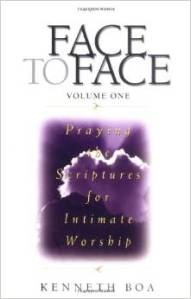
Face to Face by Ken Boa

Another great tool for growing in your relationship with the Lord through prayer is learning to pray the Scriptures. Meditating upon God’s truth can go a long way toward expanding how and what you talk about to God. The best resource I have found and use on a regular basis is Face to Face: Praying the Scriptures for Intimate Worship by Ken Boa. It works through a similar rhythm of prayer as the A.C.T.S. paradigm above, but it also provides Scriptures to guide your thoughts and give voice to your prayers. You can buy it on Amazon by clicking on the image below:


Boa Image

Gospel-Centered Prayer for Church-Wide Renewal

Strategies for church growth and revitalization line the walls of Christian book stores. The methods vary as much as the stories that highlight them. Pragmatism is king in our society, and pastors tend to fall prey to this along with everyone else. Despite this tendency, many of these books are legitimately helpful and provide inspiration and insights for ministry. This post isn’t meant to be a bashing of church growth material, for while the materials can be a mixed bag, much good can be gained when read with discernment. The major problem with church growth material is not the content itself but the reader. Strategies are useful and even needed, but if this is where we begin, we have failed from the outset.

Church revitalization begins on our knees in prayer.

Martin Luther understood this well: “If I fail to spend two hours in prayer each morning, the devil gets the victory through the day. I have so much business I cannot get on without spending three hours daily in prayer.”

But we know this not because I say this or Martin Luther claims it, but rather because God promises renewal if we pray.

If my people who are called by my name humble themselves,and pray and seek my face and turn from their wicked ways, then I will hear from heaven and will forgive their sin and heal their land.

-2 Chronicles 7:14

When our churches fail, when we stumble–even run–into sin, and when we grow cold in our love for Jesus, God calls us not to get to work but to come to Him. Why is it that we point people to grace for salvation and again as they fail individually, but when we are faced with a dying church that we immediately turn to the work we can do? God promises holistic renewal for our churches if we would devote ourselves to prayer not because our labor in prayer is a worthy work, but because prayer is a return to the Gospel.

2 Chronicles 7:14 clearly portrays God’s call to Gospel-centered prayer for the sake of renewal. Each act in this verse finds its beginning in prayer and gives us the clear shape of what our prayers should look like. Humbling ourselves begins with prayer to God exhibiting reliance upon him. Seeking God’s face begins with prayer that seeks a right relationship with God. Finally, turning from our wicked ways begins with prayer that turns our hearts toward God and away from sin.

Prayer is the most fundamental Gospel practice, and it’s the Gospel that is the power of God for salvation. As seen in this passage, prayer is fundamental because it exhibits three primary responses to the Gospel:

  1. Reliance – we admit and seek total reliance upon God.
  2. Right Relationship – we put idols aside and seek the face of God through the work of Christ.
  3. Repentance – we turn from sin by the grace of God.

So why does God call his people to prayer in order to experience renewal? Because biblical prayer drives us to meditate upon, experience, and practice the gospel in our lives.

Church revitalization begins on our knees in prayer. To begin anywhere else is to trust in something other than the Gospel. Will we devote ourselves to prayer or place our hopes in someone else?

Forming a Prayer Habit

During my small group this past week, we discussed the idea of forming habits. We reflected upon the general feeling that habits are so often viewed in a negative light. For many in the Church, we have reacted against legalism with a complete avoidance of habits, yet Scripture actually affirms some habits as good (see 1 Timothy 4:7-8; Hebrews 10:24). If any practice in Scripture is affirmed as worthy of developing a habit, it’s prayer. In fact, Paul so wants this habit to be built into our lives that he urges us to “pray without ceasing” (1 Thessalonians 5:17).

But how do we build such a constant habit of prayer? It seems like an impossible goal.

Think about this, though. A few days ago, my wife and I were on weekend trip to the Poconos, and we did a 25 mile bike ride, which got us thinking about Iron Man races. Basically, we talked about how impossible an Iron Man seems. Just imagine a 2.4 mile swim, 26.2 mile run, and 112 mile bike ride all in the same day! We couldn’t imagine how anyone could accomplish such a feat.

But people do it all the time.

How? Incremental training over a long period of time.

So how do we build toward praying constantly? We start small in two areas: focused planned prayer and triggered spontaneous prayer.

Focused planned prayer
Start by setting aside five minutes per day for prayer. While you can do this anywhere, I’d suggest finding a place in your home where you can be completely focused on talking to the Lord. Each week increase the amount of time you spend in prayer by 2-3 minutes. Don’t burn yourself out by starting out too long. Just like training for an Iron Man, you’ve got to build habits of prayer that increase over time.

Triggered spontaneous prayer
Set apart a couple of triggers in your mind to spark spontaneous prayer throughout your day. What are triggers? Specific places, times, events, people, etc. The key is to make your triggers something specific encountered on a daily basis. For instance, many people have a trigger already built in: meals. We sit down for a meal and pray before we eat. Other possibilities could be when you receive a text message, when you get on the subway or in your car, or when you do a specific task that is otherwise brainless. Brainstorm and identify a couple of triggers that will remind you to pray at various points throughout your day beyond your focused planned prayer time.

Commit to these two areas of prayer, and over time, a habit of prayer will be formed that will grow your relationship with the Lord and produce significant fruit in your life and others’.

Apathetic Attendance or Passionate Participation?

Every Sunday dead people attend worship in churches all over our country. Many do this for years—even decades. Attendance at church is easy. Anyone can check that box off.

What’s not easy is passionately participating in Sunday worship.

As I discussed earlier this week, worship with the whole church is a gracious gift of God in our lives. He values it so much that Hebrews 10:24-25 urges us not to neglect meeting together and passionately participating in each other’s lives.

But so many things get in the way of that. Our plans for Saturday night keep us out too late to even be halfway awake for worship the next morning, or our Sunday afternoon plans have us distracted during and immediately after the service. Other times we find ourselves in a really tough season of life: those times when suffering and despair seem to consume us, and nothing about our spiritual lives is easy especially trying to worship. Finally, some weeks busyness consumes our personal time with the Lord, and we spend the first half of worship just trying to reengage spiritually.

How can we passionately participate with our church on a regular basis with so many potential obstacles?

Here’s my three suggestions:

1. Plan
Passionately prioritize worship with your church family, and then plan your weekend accordingly. Failing to plan our weekends so that we are rested and focused for worship on Sundays will hinder us from receiving the full richness of God’s gift for us. So I encourage you to spend time planning your Saturday nights and Sunday afternoons in such a way that you are rested and focused to not only receive the blessing of corporate worship, but also give your presence and service to others.

2. Pray
No matter what season of life you are in, Satan is seeking to steal, kill, and destroy. Apart from relying upon God to deliver us from the evil one, we will fall to his attacks. May we regularly pray that God would protect us from the evil one and prepare our hearts for passionate participation in worship. Also, let’s pray the same for those leading us each week.

3. Prime
Finally, prime the pump. In other words, read the passage of Scripture being preached before it’s preached. The more familiar we are with the text, the better prepared we will be to engage in active listening to the preacher and ultimately the Holy Spirit.

Let’s not simply attend worship, but may we passionately participate for the fame of Jesus and the good of the church.