The Beatitudes: Promises Received & Experienced in Christ

Last week, Jesus kicked off his ministry in Matthew 4, and in Matthew 5 we find his most famous teaching: the Sermon on the Mount. We’ll be checking out the promises of blessing that Jesus gives in the first section of that sermon.

Seeing the crowds, he went up on the mountain, and when he sat down, his disciples came to him. And he opened his mouth and taught them, saying:
Blessed are the poor in spirit, for theirs is the kingdom of heaven.
Blessed are those who mourn, for they shall be comforted.
Blessed are the meek, for they shall inherit the earth.
Blessed are those who hunger and thirst for righteousness, for they shall be satisfied.
Blessed are the merciful, for they shall receive mercy.
Blessed are the pure in heart, for they shall see God.
Blessed are the peacemakers, for they shall be called sons of God.
Blessed are those who are persecuted for righteousness’ sake, for theirs is the kingdom of heaven.
Blessed are you when others revile you and persecute you and utter all kinds of evil against you falsely on my account. Rejoice and be glad, for your reward is great in heaven, for so they persecuted the prophets who were before you.
-Matthew 5:1-12

The Beatitudes, maybe the most famous of all of Jesus’ teachings, are eight incredible promises. Anyone who reads this text longs for these to be true in his life. Yet, simultaneously, we get the gut-wrenching feeling that we don’t measure up to most, if not all, of these. I don’t know about you, but I’m certainly not pure in heart, more often than not I’m not hungering for righteousness, and humility and meekness are often hard to come by. I’m certainly not the poster child for these things, and I’d venture to guess that neither are you.

Even the one that is a bit more passive—those who mourn shall be comforted—I have a hard time believing at times. I’ve mourned a good bit in my lifetime, but sometimes comfort is hard to come by.

So what’s the deal with these promises?

First, these promises are fulfilled in Jesus.

Jesus is perfectly humble, meek, pure, and merciful. He embodies each of these promises and has fully experienced their fulfillment through his death, resurrection, and ascension. He did what we couldn’t do so that we might experience these blessings that he longs to give us. He has inherited the kingdom of heaven and the entire earth. He now reigns over all. He alone can see God because of his own holiness, and it’s truly an amazing grace that he invites us to experience these things through faith in Him.

Thus the second point: we experience these promises through Jesus.

One day we will be perfect and complete in Christ, and it’s at that moment that we will finally experience the fullness of these promises. But we can experience the fruit of these promises now as we grow in Christlikeness.

These promises are ours now and forever. The question is: will we cultivate these characteristics of Christ in our lives or will we avoid these things that the world often scoffs at?

So how do we cultivate Christlikeness?

We look at Christ over and over and over again. We do this through reading His Word to see who He is, hearing His Word preached, taking the Lord’s Supper, and living in close community with the Church and recognizing Christ in one another. Each of these shapes us little by little into the image of Christ. We need them all.

May the promises in the Beatitudes spur us on to pursue Christlikeness in this way.
The Power of Stories

Hulu, Netflix, and Amazon Prime have all fed the binge-watching tv trend. Certainly, ease of access through online streaming has made binge-watching habits drastically higher, but this isn’t the only reason that so many of us devour show after show.

**I’m as guilty of this habit as anybody. My wife and I are about to finish the final season of 24 after having just started earlier this year.**

Another major reason is our culture’s obsession with stories. Postmodernity has led to a breakdown in the expectation for one overarching narrative that explains everything. In light of that, we emphasize and look for the truth we find in smaller, individualized stories. We wrestle with ideas of beauty, evil, truth, and the deepest questions of life through hearing stories from various mediums (TV, theater, music, etc.).

Stories are incredibly powerful, and our society is constantly searching for new stories to either give voice to their thoughts or bring understanding to the complexities of this world.

As Christians, we each have our own powerful story that communicates the greatest truth of all time: the Gospel—a story in itself.

Our personal story of our life before we met Jesus, our encounter with Jesus, and our transformed life after meeting him is one of the most potent tools for sharing the grace, mercy, love, and forgiveness of our God and Savior.

This week’s text—Acts 26—is just one of several examples throughout the book of Acts of Paul sharing the Gospel through his personal experience.

Like any good story, there are several clear plot points: 
     1. His life before Jesus
     2. His encounter with Jesus
     3. His life with Jesus
     4. His call to respond to the story

People are more often than not willing to hear out your personal story rather than a four point Gospel sermon. So take advantage of the power of your own personal story. Think through these points in your own life and shape how you share your story. Then share it with the same boldness and passion that Paul shared his in Acts 26.

Let the truth of the Gospel shine forth through your life to an unbelieving world.

The Living Dead

We’re turning toward how we are called to sacrificially invest through strategic mission in evangelism—sharing the gospel. And we are beginning by considering just what that Gospel is. So we’re turning to one of the richest passages in Scripture to meditate upon that Gospel message.

The Living Dead (vv.1-3)
Zombies are in. From The Walking Dead to World War Z, we are obsessed with zombies. The idea of the living dead is not new to our society. Zombie movies have been made for decades now, but spiritually, this concept actually reflects a truth that is as old as the Scriptures.
What we find in Ephesians 2:1-10 is that we really are in one sense living dead. In our sin, that is rebellion against God’s good intentions, we are living and breathing and acting in this world, but we are spiritually, relationally, and emotionally broken, more than that, truly dead.

The Disease
It’s not Ebola, nor is it some other virus or biological weapon of most zombie movies, but the disease we are infected with is sin, a rebellion against God and a brokenness in our humanity.
Because of this sin, we don’t flourish as God intends. Instead, we follow the “passions of our flesh.” We are “carrying out the desires of the body and the mind.” Rather than God’s beautiful desires for abundant life, we pursue base, sinful subhuman desires, and we continue in that path as long as we are left on our own.

The Consequences
So, Paul says, we’re children of wrath, which means we have a coming inheritance of wrath from God. As a result of choosing sin and evil, we deserve just punishment from a righteous God. We deserve justice and death.

Again, we’re dead men walking. We are stuck in this pattern apart from intervention. We won’t suddenly snap out of it. We can’t suddenly revive ourselves and avoid the just punishment from our righteous God. We are in desperate need of an outside intervention. And in verse 4, “But God” signifies the beginning of that intervention. The human condition is dire, BUT there is more to the story of the Gospel.

God Gave True Life (vv. 4-9)
Immeasurable Grace
God has intervened because the richness of his mercy and “the great love with which he loved us.” He did not leave us without hope in our horrid condition. Through Jesus, he shows “the immeasurable riches of his grace.” The work of Jesus that this passage refers to is the death he experienced on the cross. He took our disease—our sin—and death—our consequence—upon himself. He made us a way to exchange our inheritance of wrath for his inheritance: abundant, eternal life.

 Through faith not works
Paul makes it really clear that this life we receive has no connection to our works. It’s totally a gift by the work of Jesus. We simply receive this immeasurable grace and life by trusting (having faith) in God and his ability to bring new life.

We’re Alive for a Purpose (v. 10)
Glorifying God by Doing Good
The good news of the Gospel doesn’t just end once we are rescued from death by God’s immeasurable love and grace. In fact, it leads us and empowers us to live truly human lives. God saves us glorify Him by doing good works. This is what we were created for, and now we are freed from the disease of sin to actually live our God intended purpose: experiencing and spreading true abundant life.

Have you trusted in God for true, abundant life, or are you still trusting in yourself and settling for a life far from God’s beautiful intention? Trust Him today. (If you have questions, feel free to message me about any of this.)

Have you been trusting in Him but not enjoying the full riches of this new life because you’ve missed that God saved you for a purpose? Consider how God is calling you to use your freedom and life in Christ to glorifying Him by doing good in the world.

Death by Doctrine

Doctrine… What an outdated term! At least that’s how most people feel. Hearing the word “doctrine” produces images of tired, old theologians studying ancient, dust-laden books in a decrepit library far from society. Unfortunately, that’s an entirely ill-conceived idea.

Doctrine is simply the set of beliefs one holds as a church. In fact, rather than a conception of irrelevancy and decrepitness, doctrine can actually be life-giving. Doctrine that flows from the Scripture and is centered upon the Gospel is a solid foundation and a source of strength for a church.

BUT doctrine can very easily be a poison that undermines the church and leads to death if it’s not based upon the truth of Scripture. In fact, this is just the death that Pergamum had begun to experience in the book of Revelation. This second church in need of Revitalization is called out by Jesus for giving into false teaching, or in other words, deadly doctrine.

Any church that veers from the truth of God’s Word and the Gospel will experience a decline in spiritual vitality and ultimately death. Some may keep their physical numbers up as they merely tickle the ears of the world around them, but their people will not be receiving life.

Cling to God’s Word and the Gospel as your foundation and authority.

Otherwise, your church will experience the death threatened by Jesus to the church in Pergamum.

Implementing Intentional Discipleship

Gospel-centered discipleship has been the theme for the past several weeks. We’ve seen how much of our discipleship is off balanced.

But now, we’ve got to ask, “How do we actually do this discipleship thing?”

Intentionality is key in consistent growth as disciples, and without some tangible, practical handles for implementing discipleship, we will never get around to consistent growth and maturity in our faith. And we as a church have committed to sacrificially invest through intentional discipleship for the fame of Jesus.

In the final chapter of Jonathan Dodson’s Fight Clubs, he provides a few simple, practical tools for intentional discipleship. His model is Biblical, effective, and easily reproducible, which is why we have adopted this as the basic structure of how we are going to pursue intentional discipleship.

So what are these basics?

1. Three Objectives: “Know Your Sin, Fight Your Sin, and Trust Your Savior.”

First, we must work to know our sin, our struggles. We’ve got to examine our hearts and allow others to examine our hearts. What are our sins? What are the circumstances and triggers for our sin? What lies are we believing?

Second, we must be committed to fighting our sin. We do this in the power of the Spirit and by the grace of God, but we must fight.

Third, we must turn from the lies we’ve identified and the sins we are committing as a result, and we must trust our Savior. Identify the promises that Jesus gives us in the Scriptures to counter the lies we are believing. An example of this from Fight Clubs:

“Instead of sexual lust, choose purity of heart: ‘Blessed are the pure in heart for they shall see God.’ God is eternally satisfying; lust is fleeting.”

Fighting sinful lies with the promises of God is the kind of fight we are called to in discipleship.

2. Two People: A discipleship group consists of at least two people, but no more than three, who meet together regularly for the sake of intentional times of discipleship.

*Discipleship is not limited to the meeting times and is, in fact, enhanced by living life together in general. But without these regular meetings, intentionality will be lost.

3. One Process: “Text-Theology-Life”

Let Scripture guide your time together, for it’s the one source of truth and life that we can count on. Begin with the text. Study the same Scripture passage and discuss it when you get together. Begin with this to avoid spending all your time catching up. Share how God has been teaching you through this passage.

Next, discuss theology. All this means is talk about what this passage teaches about God and his promises. Dodson suggests asking this question: “How does the person and work of Jesus inform this text?”

Finally, connect this to Life: How do these truths help you to “know your sin, fight your sin, and trust your savior.” Dig into each other’s lives, struggles, and victories. Apply the truths of Scripture to your lives.

**These basics are a summary of chapter five of Jonathan Dodson’s Fight Clubs**

Imagine what God would do through us if we pursue sacrificial investment through intentional discipleship like this. Imagine the fruit he would produce within us as we grow in the grace of the gospel. 

Imagine how God could then multiply these groups if we pour into a couple of men or women for a season and then call them to go and do the same.

If just five of us commit to do that, then ten others would be intentionally discipled. Then, after a semester or year, they begin to pour into others intentionally in the same way. Suddenly there are 45 people in intentional discipleship relationships. Do that one more time, and you have 135 people pointing each other to the gospel on a regular basis. Imagine what God could do with an entire church committed to this!

Let us be a people that sacrificially invest through intentional discipleship so that God would multiply it for His fame and our good.

The Missing Connection: Discipleship & Church Membership

Most people see little, if any, connection between discipleship and church membership. Yet as we are reading through Fight Clubs, Jonathan Dodson brings the essential nature of the church to bear upon discipleship. Unfortunately, as Dodson points out, “The gospel has been reduced to a personal ticket to glory. But the biblical gospel is much more than personal conversion or a heavenly reservation. The Gospel has two more ‘thirds.’ The Gospel calls us into community and onto mission in Jesus” (39). Thus growing in the gospel, i.e. discipleship, must be connected to growing in one’s relationship to the church. Dodson declares, “As the church, we are called to live, grow, and fight together for belief in the gospel and obedience to Christ” (41). Connecting and living life with a specific local church is essential to experience the totality of this reality. Thus church membership is vital for discipleship.

But maybe that is too quick of a jump for some. Maybe you object that church membership isn’t necessary as long as you’re connected to a community of believers. However, I would seriously disagree. Church membership isn’t simply getting your name on a role, and certainly, one’s salvation isn’t contingent upon it. Additionally, when Christ saves a person, he or she is already made part of the universal church, the people of God, throughout history. But church membership is about a commitment with a specific group of Christians. This commitment is a covenant modeled off God’s gracious, unending covenant with us. It’s a covenant to “live, grow, and fight together for belief in the gospel and obedience to Christ,” and to not give up on one another when the going gets tough. Church membership is a commitment to live out the “one another’s” of the New Testament toward specific people—even when that may not be returned.

The One Another’s

These “one another’s” refer to 50+ passages that define how the church is to “live, grow, and fight” with one another. Here’s a compiled list:

“Love one another: John 13:34-35; 15:12, 17; Romans 12:10; 13:8; 14:13; 1 Thessalonians 3:12; 4:9; 2 Thessalonians 1:3; 1 Peter 1:22; 1 John 3:11, 3:22; 4:8; 23; 4:7, 11-12; 2 John 1: 5
Serve one another: Galatians 5:13; 21; Philippians 2:3; 1 Peter 4:9; 5:5
Accept one another: Romans 15:7, 14
Strengthen one another: Romans 14:19
Help one another: Hebrews 3:13; 10:24
Encourage one another: Romans 14:19; 15:14; Colossians 3:16; 1 Thessalonians 5:11; Hebrews 3:13; 10:24-25
Care for one another: Galatians 6:2
Forgive one another: Ephesians 4:32; Colossians 3:13
Submit to one another: Ephesians 5:21; 1 Peter 5:5
Commit to one another: 1 John 3:16
Build trust with one another: 1 John 1:7
Be devoted to one another: Romans 12:10
Be patient with one another: Ephesians 4:2; Colossians 3:13
Be interested in one another: Philippians 2:4
Be accountable to one another: Ephesians 5:21
Confess to one another: James 5:16
Live in harmony with one another: Romans 12:16
Do not be conceited to one another: Romans 13:8
Do not pass judgment to one another: Romans 14:13; 15:7
Do not slander one another: James 4:11
Instruct one another: Romans 16:16
Greet one another: Romans 16:16; 1 Corinthians 1:10; 2 Corinthians 13:12
Admonish one another: Romans 5:14; Colossians 3:16
Spur one another on toward love and good deeds:  Hebrews 10:24
Meet with one another: Hebrews 10:25
Agree with one another: 1 Corinthians 16:20
Be concerned for one another: Hebrews 10:24
Be humble to one another in love: Ephesians 4:2
Be compassionate to one another: Ephesians 4:32
Do not be consumed by one another Galatians 5:14-15
Do not anger one another: Galatians 5:26
Do not lie to one another: Colossians 3:9
Do not grumble to one another: James 5:9
Give preference to one another: Romans 12:10
Be at peace with one another: Romans 12:18
Sing to one another: Ephesians 5:19
Be of the same mind to one another: Romans 12:16; 15:5
Comfort one another: 1 Thessalonians 4:18; 5:11
Be kind to one another: Ephesians 4:32
Live in peace with one another: 1 Thessalonians 5:13
Carry one another’s burdens: Galatians 6:2”
– Into Thy Word Ministries, http://www.intothyword.org

Many of these are impossible to live out in loose, general connection with other Christians but must be lived out through the covenant of church membership.

The covenant of church membership is a grace of God for reminding us of how essential and serious our commitment to one another in a local church is. When times are good, it’s easy to love others and live these out, but our covenant spurs us to do so even when it’s not reciprocated (modeling God’s one-way love for us).

Discipleship—growing in the gospel—is tightly connected with the covenant of church membership, for we will only grow in the fullness of the gospel has we experience the totality of Gospel-centered community life in a local church.

Avoiding License in Discipleship

Many of us have come for moralistic/legalistic backgrounds. Sunday school lessons were often focused upon the rules we’re meant to obey rather than the grace we’re meant to rely upon. As a result, many of us have swung toward the other end of the spectrum in order to avoid the strict self-righteousness that characterizes the legalism we grew up around. The problem is the other end of the spectrum is license, another deadly peril.

The glorious news of the Gospel is that Jesus has made us righteous and holy based upon grace rather than upon anything we can do. Yet, just because we’ve been saved by grace and we cannot earn God’s favor on our own, we aren’t to continue in sin. But the temptation toward license is the idea that we are free to live as we please since grace will always cover us.

The attitude of license completely undermines discipleship.

Paul directly battled this attitude in Romans 6:1-4.

What shall we say then? Are we to continue in sin that grace may abound? By no means! How can we who died to sin still live in it? Do you not know that all of us who have been baptized into Christ Jesus were baptized into his death? We were buried therefore with him by baptism into death, in order that, just as Christ was raised from the dead by the glory of the Father, we too might walk in newness of life.

We are to embrace grace and allow that to joyfully lead us to the pursuit of holiness both toward God and man. We’ve been freed not to lazily pursue whatever desires our flesh produces because grace covers those sins, but we’ve been freed from sin and the flesh to pursue holiness for the glory of God (Romans 6:19).

Avoid both legalism and license. And pursue holiness for the glory of God and the good of man by trusting in grace and not yourself.

Gospel Centered Discipleship by Jonathan Dodson

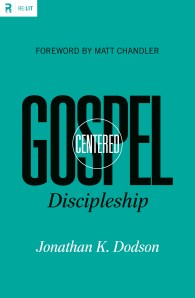
As we turn our focus to sacrificially investing through intentional discipleship, there is one resource that I highly recommend. This past summer, we did a book study on Gospel Centered Discipleship by Jonathan Dodson. (We are currently working through the booklet version—Fight Clubs—in our small groups.) This resource provides a biblical understanding of discipleship, correctives for typical misconceptions, and great practical tools for making and maturing disciples. Check it out, and start making disciples!

Gospel-Centered-Discipleship

False Dichotomies of Discipleship

For the next four weeks, we are shifting our attention toward intentional discipleship. Rather than reflecting upon Scripture as I normally do, I will be considering some of the insights I’ve gleaned from Jonathan Dodson’s Fight Clubs as well as his more extended version Gospel-Centered Discipleship.

Through the first couple of chapters, Dodson considers the misconceptions that are often present concerning discipleship. If we don’t avoid two false dichotomies, we will end up with a terribly misshapen view of discipleship and incredibly distorted disciples.

False Dichotomy #1: Evangelism vs. Discipleship

For some reason, the American church has tended to view the Gospel as relevant to unbelievers only. The Gospel is viewed as simply the first class among many in the Christian life. In this paradigm, discipleship becomes programs and rituals that are add ons to enhance the Christian life.

However, as Dodson rightfully points out, this kind of attitude is incredibly unhelpful and starkly unbiblical. All of life is to revolve around the Gospel. We never move on from the good news that Jesus has saved us by grace through faith. So making disciples includes sharing the Gospel with unbelievers (evangelism) and maturing disciples (discipleship) through the Gospel as well. In this sense, evangelism and discipleship aren’t totally separate ideas, but instead, they are both centered upon and proclaiming the Gospel.

False Dichotomy #2: Vertical vs. Horizontal

Although we may not consciously adhere to this false dichotomy, we practically live it out. Some of us focus on discipleship that is oriented solely toward growing in our personal relationship with God. Others seek to grow in their missional reach and effectiveness.

Doing one of these without the other will create either monks or pragmatists. We must grow in both piety and mission.

May we throw off these false dichotomies and embrace a holistic discipleship centered upon the Gospel.

Two Annoying Aspects of Prayer

I’ll admit it. Making a bold shameless ask and being persistent in it makes me highly uncomfortable. I’ve never wanted to be perceived as taking advantage of others, overstaying my welcome, or pursuing my own desires over others’. Most likely, I don’t like these things because I find them highly annoying in other people particularly when accompanied by entitlement.

Yet, shamelessness and persistence are two aspects of prayer that Jesus calls us to in the book of Luke.

First, Jesus shares a story of a friend in need:

And he said to them, “Which of you who has a friend will go to him at midnight and say to him, ‘Friend, lend me three loaves, for a friend of mine has arrived on a journey, and I have nothing to set before him’; and he will answer from within, ‘Do not bother me; the door is now shut, and my children are with me in bed. I cannot get up and give you anything’? I tell you, though he will not get up and give him anything because he is his friend, yet because of his impudence [bold shamelessness] he will rise and give him whatever he needs. And I tell you, ask, and it will be given to you; seek, and you will find; knock, and it will be opened to you. For everyone who asks receives, and the one who seeks finds, and to the one who knocks it will be opened. What father among you, if his son asks for a fish, will instead of a fish give him a serpent; or if he asks for an egg, will give him a scorpion? If you then, who are evil, know how to give good gifts to your children, how much more will the heavenly Father give the Holy Spirit to those who ask him!” – Luke 11:5-13

Shamelessness flows from childlike faith not entitled pride. The person in the story pursued his friend’s help because he knew his friend’s character: avoiding shame at all costs. As for us, we can boldly and shamelessly ask God for all our needs and desires when we have a childlike faith in His character as our loving, gracious, and merciful heavenly Father. We don’t seek answers because we’ve earned them but because He is gracious.

Prayer is not cashing a paycheck, but trusting in grace.

Second, Jesus shares a story of a persistent widow:

And he told them a parable to the effect that they ought always to pray and not lose heart. He said,“In a certain city there was a judge who neither feared God nor respected man. And there was a widow in that city who kept coming to him and saying, ‘Give me justice against my adversary.’ For a while he refused, but afterward he said to himself, ‘Though I neither fear God nor respect man, yet because this widow keeps bothering me, I will give her justice, so that she will not beat me down by her continual coming.’” And the Lord said, “Hear what the unrighteous judge says. And will not God give justice to his elect, who cry to him day and night? Will he delay long over them? I tell you, he will give justice to them speedily. Nevertheless, when the Son of Man comes, will he find faith on earth?” – Luke 18:1-8

Persistence flows from complete reliance not arrogant manipulation. The widow knew her only hope for justice was to go to the one who had the power to accomplish it. She recognized her powerlessness, embraced it, and relied completely upon the judge. She didn’t persist as some tactic to manipulate him, but out of her need for his grace. The same goes for our prayers to God.

Prayer is not a tool to manipulate God, but an exhibition of faith.

May we come to our heavenly Father as His sons and daughters with bold shamelessness and undying persistence and make our requests known to Him with expectant faith for how He will answer.