Shaping & Sharing Your Story

On Monday, we considered the power of story both in our culture today and in the story of Paul in Acts 26. I encouraged everyone to consider how you would share your own personal story in order to communicate the Gospel. But many of you may be at a loss as to how to share your story in a clear way.

So, here’s a resource from InterVarsity. This tool provides questions to spark your thinking about how to shape and share your story. It hits the same basic plot points that I discussed on Monday: life before Jesus, how you met Jesus, life with Jesus.

Check it out if you need help shaping your story, and pay close attention to their advice at the end: Keep your story short so it’s easy to tell. You can always expand on something when people ask questions.

 30 Minutes to a Shareable Testimony Worksheet

The Power of Stories

Hulu, Netflix, and Amazon Prime have all fed the binge-watching tv trend. Certainly, ease of access through online streaming has made binge-watching habits drastically higher, but this isn’t the only reason that so many of us devour show after show.

**I’m as guilty of this habit as anybody. My wife and I are about to finish the final season of 24 after having just started earlier this year.**

Another major reason is our culture’s obsession with stories. Postmodernity has led to a breakdown in the expectation for one overarching narrative that explains everything. In light of that, we emphasize and look for the truth we find in smaller, individualized stories. We wrestle with ideas of beauty, evil, truth, and the deepest questions of life through hearing stories from various mediums (TV, theater, music, etc.).

Stories are incredibly powerful, and our society is constantly searching for new stories to either give voice to their thoughts or bring understanding to the complexities of this world.

As Christians, we each have our own powerful story that communicates the greatest truth of all time: the Gospel—a story in itself.

Our personal story of our life before we met Jesus, our encounter with Jesus, and our transformed life after meeting him is one of the most potent tools for sharing the grace, mercy, love, and forgiveness of our God and Savior.

This week’s text—Acts 26—is just one of several examples throughout the book of Acts of Paul sharing the Gospel through his personal experience.

Like any good story, there are several clear plot points: 
     1. His life before Jesus
     2. His encounter with Jesus
     3. His life with Jesus
     4. His call to respond to the story

People are more often than not willing to hear out your personal story rather than a four point Gospel sermon. So take advantage of the power of your own personal story. Think through these points in your own life and shape how you share your story. Then share it with the same boldness and passion that Paul shared his in Acts 26.

Let the truth of the Gospel shine forth through your life to an unbelieving world.

The Story of the Gospel

Tracts often get a bad rap, and often, rightly so! But if you are looking for an easy to use tool that is also readily accessible to people in our digital age, then The Story is a great resource.

This short digital booklet summarizes the Gospel message well, and it looks good!

If you are in need of something to point people to who you may not get the opportunity to continue a conversation with or someone that may simply want something to mull over between conversations, then this resource is for you. Check it out by clicking the image below:

booklet

The Living Dead

We’re turning toward how we are called to sacrificially invest through strategic mission in evangelism—sharing the gospel. And we are beginning by considering just what that Gospel is. So we’re turning to one of the richest passages in Scripture to meditate upon that Gospel message.

The Living Dead (vv.1-3)
Zombies are in. From The Walking Dead to World War Z, we are obsessed with zombies. The idea of the living dead is not new to our society. Zombie movies have been made for decades now, but spiritually, this concept actually reflects a truth that is as old as the Scriptures.
What we find in Ephesians 2:1-10 is that we really are in one sense living dead. In our sin, that is rebellion against God’s good intentions, we are living and breathing and acting in this world, but we are spiritually, relationally, and emotionally broken, more than that, truly dead.

The Disease
It’s not Ebola, nor is it some other virus or biological weapon of most zombie movies, but the disease we are infected with is sin, a rebellion against God and a brokenness in our humanity.
Because of this sin, we don’t flourish as God intends. Instead, we follow the “passions of our flesh.” We are “carrying out the desires of the body and the mind.” Rather than God’s beautiful desires for abundant life, we pursue base, sinful subhuman desires, and we continue in that path as long as we are left on our own.

The Consequences
So, Paul says, we’re children of wrath, which means we have a coming inheritance of wrath from God. As a result of choosing sin and evil, we deserve just punishment from a righteous God. We deserve justice and death.

Again, we’re dead men walking. We are stuck in this pattern apart from intervention. We won’t suddenly snap out of it. We can’t suddenly revive ourselves and avoid the just punishment from our righteous God. We are in desperate need of an outside intervention. And in verse 4, “But God” signifies the beginning of that intervention. The human condition is dire, BUT there is more to the story of the Gospel.

God Gave True Life (vv. 4-9)
Immeasurable Grace
God has intervened because the richness of his mercy and “the great love with which he loved us.” He did not leave us without hope in our horrid condition. Through Jesus, he shows “the immeasurable riches of his grace.” The work of Jesus that this passage refers to is the death he experienced on the cross. He took our disease—our sin—and death—our consequence—upon himself. He made us a way to exchange our inheritance of wrath for his inheritance: abundant, eternal life.

 Through faith not works
Paul makes it really clear that this life we receive has no connection to our works. It’s totally a gift by the work of Jesus. We simply receive this immeasurable grace and life by trusting (having faith) in God and his ability to bring new life.

We’re Alive for a Purpose (v. 10)
Glorifying God by Doing Good
The good news of the Gospel doesn’t just end once we are rescued from death by God’s immeasurable love and grace. In fact, it leads us and empowers us to live truly human lives. God saves us glorify Him by doing good works. This is what we were created for, and now we are freed from the disease of sin to actually live our God intended purpose: experiencing and spreading true abundant life.

Have you trusted in God for true, abundant life, or are you still trusting in yourself and settling for a life far from God’s beautiful intention? Trust Him today. (If you have questions, feel free to message me about any of this.)

Have you been trusting in Him but not enjoying the full riches of this new life because you’ve missed that God saved you for a purpose? Consider how God is calling you to use your freedom and life in Christ to glorifying Him by doing good in the world.

Death by Doctrine

Doctrine… What an outdated term! At least that’s how most people feel. Hearing the word “doctrine” produces images of tired, old theologians studying ancient, dust-laden books in a decrepit library far from society. Unfortunately, that’s an entirely ill-conceived idea.

Doctrine is simply the set of beliefs one holds as a church. In fact, rather than a conception of irrelevancy and decrepitness, doctrine can actually be life-giving. Doctrine that flows from the Scripture and is centered upon the Gospel is a solid foundation and a source of strength for a church.

BUT doctrine can very easily be a poison that undermines the church and leads to death if it’s not based upon the truth of Scripture. In fact, this is just the death that Pergamum had begun to experience in the book of Revelation. This second church in need of Revitalization is called out by Jesus for giving into false teaching, or in other words, deadly doctrine.

Any church that veers from the truth of God’s Word and the Gospel will experience a decline in spiritual vitality and ultimately death. Some may keep their physical numbers up as they merely tickle the ears of the world around them, but their people will not be receiving life.

Cling to God’s Word and the Gospel as your foundation and authority.

Otherwise, your church will experience the death threatened by Jesus to the church in Pergamum.

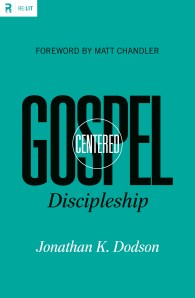
Gospel Centered Discipleship by Jonathan Dodson

As we turn our focus to sacrificially investing through intentional discipleship, there is one resource that I highly recommend. This past summer, we did a book study on Gospel Centered Discipleship by Jonathan Dodson. (We are currently working through the booklet version—Fight Clubs—in our small groups.) This resource provides a biblical understanding of discipleship, correctives for typical misconceptions, and great practical tools for making and maturing disciples. Check it out, and start making disciples!

Gospel-Centered-Discipleship